






















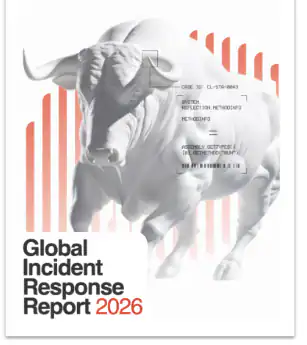
Palo Alto Networks Unit 42 Releases Global Incident Response Report 2026
As organisations accelerate digital transformation and AI adoption,
cyber adversaries are evolving even faster. Today, Palo Alto Networks® released
the Unit 42® Global Incident Response Report 2026, revealing that attackers are
leveraging artificial intelligence, identity misuse and trusted software supply
chains to breach organisations with unprecedented speed.
Based on more than 750 major incident response engagements across over
50 countries between October 2024 and September 2025, the report highlights a
decisive shift in attacker behaviour: speed, automation and authenticated
access now define modern intrusions.
AI is rapidly compressing the attack lifecycle. In 2025, the fastest 25%
of intrusions reached data exfiltration in just 72 minutes - down from 285
minutes the previous year. Meanwhile, identity weaknesses played a material
role in nearly 90% of investigations, reinforcing that identity is now the primary
attack surface in cloud-first environments.
Philippa Cogswell, Vice President, Unit 42 - Asia Pacific & Japan, Palo Alto Networks, said, “Attackers are combining AI acceleration with identity-based access to move faster and blend in better than ever before. But what stands out is that more than 90% of breaches were enabled by preventable gaps - misconfigurations, inconsistent controls and excessive identity trust. Security is solvable. Organisations that consolidate visibility, enforce least privilege and automate response can dramatically reduce both the likelihood and impact of a breach.â€
​​Unlike traditional attacks confined to a single
system, modern intrusions span the enterprise. In 87% of cases, attackers
operated across multiple attack surfaces, including endpoints, networks, cloud,
SaaS and identity layers. Nearly half (48%) involved browser-based activity,
underscoring the browser as a critical frontline in today’s threat landscape.
The report also reveals a significant evolution in extortion tactics.
While ransomware remains prevalent, encryption is no longer guaranteed. In
2025, encryption appeared in 78% of extortion cases, down sharply from above
90% in previous years. Attackers are increasingly relying on data theft and
exposure as primary leverage. Median ransom demands rose from US$1.25 million
in 2024 to US$1.5 million in 2025.
Key findings from the Unit 42 Global Incident Response Report 2026
include:
· AI as a Force
Multiplier: Threat actors are automating reconnaissance, phishing, scripting
and extortion operations, enabling parallelised attacks at scale and reducing
time-to-impact.
· Identity as the
Primary Entry Point: 65% of initial access is identity-driven, with stolen credentials,
MFA bypass and IAM misconfigurations enabling rapid privilege escalation and
lateral movement.
· Software Supply Chain
Risk Expansion: SaaS integrations, vendor management planes and transitive
open-source dependencies are creating inherited trust pathways attackers
exploit for downstream impact.
· Nation-State
Adaptation: State-aligned actors are shifting toward deeper infrastructure
compromise, virtualization layer exploitation and persona-driven infiltration,
with early signs of AI-enabled tradecraft.
To counter these trends, Unit 42 recommends organisations:
· Deploy
phishing-resistant MFA and eliminate standing administrative privileges
· Continuously monitor
and govern human and machine identities
· Consolidate telemetry
across endpoint, cloud, SaaS and network environments
· Automate containment
actions to reduce response time from hours to minutes
· Inventory and govern
third-party SaaS integrations and AI workflows
Leave A Comment