


















Global startups shape new AI, quantum and sustainable tech frontiers at GITEX AI ASIA
The last day of
GITEX AI ASIA 2026 turned the spotlight on the global startups, scientists,
investors, and frontier technologies riding Southeast Asia’s next big
inflection point. The region is moving beyond a foundational digital economy
into a more intelligent AI future, with AI investment in Southeast Asia
projected to grow at a compound annual rate of 25% and surpass US$ 110 billion
by 2028. Amid the AI surge, global tech firms, venture capitalists, and startup
ecosystems are rallying towards expanding in the region.
This momentum was evident at
GITEX AI ASIA and its startup showcase, North Star Asia, presented by GITEX,
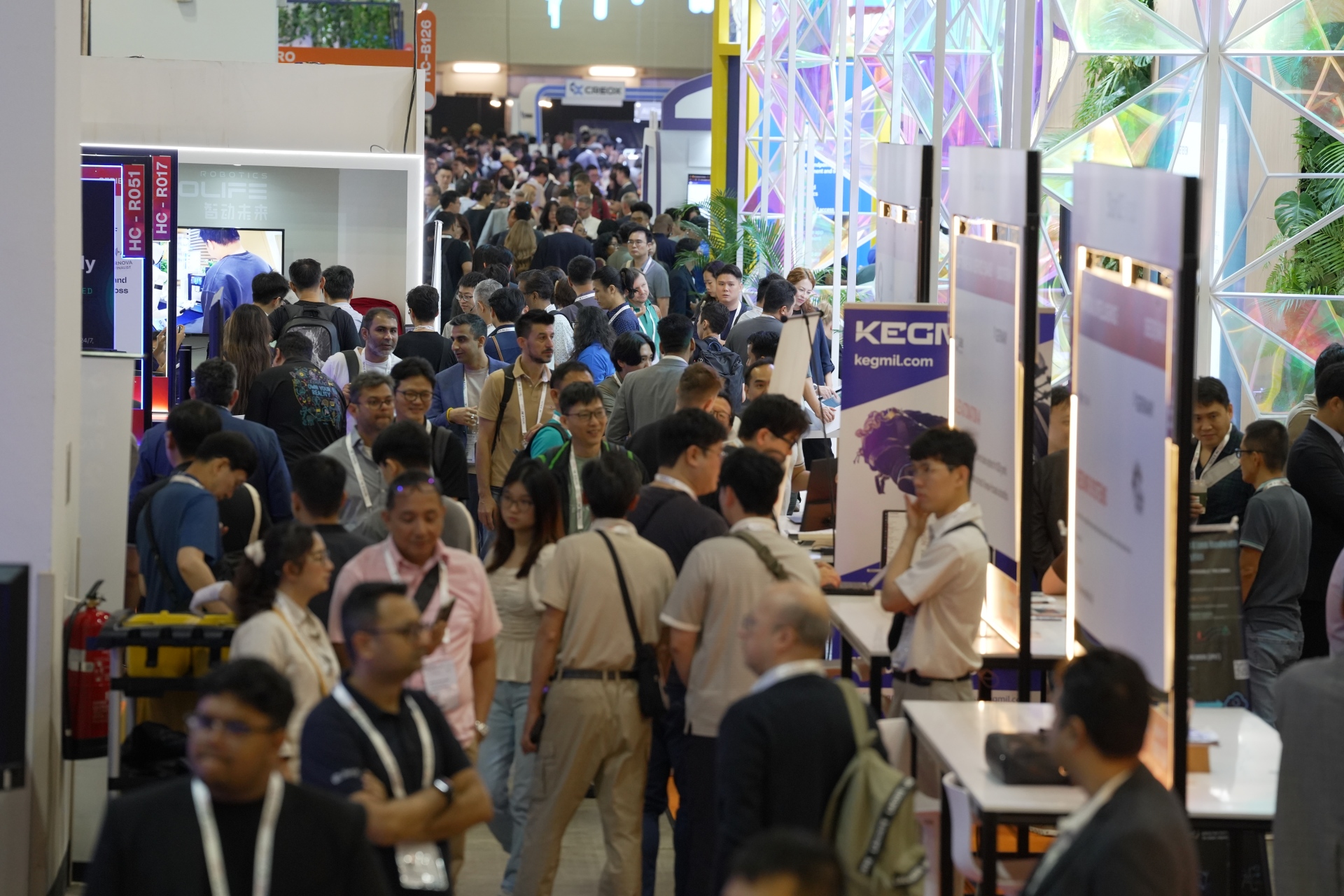
the world’s largest tech and AI startup events network. More than 300 startups
from over 50 countries met investors managing upwards of US$350 billion in
assets, creating one of the region’s more concentrated areas this year for
startup discovery, deep-tech matchmaking and commercial scrutiny. Across the
show floor and the conference programme, the conversations sharpened around the
technologies and business models best placed to scale in an AI economy shaped
by regulation, industrial urgency, critical energy, and the race to turn research
into revenue.
North Star Asia draws a new geography of startup scale
Alongside tech pavilions from
Hong Kong, India, Japan, the Netherlands, Pakistan, and South Korea, new
first-time country pavilions from Belgium and the Philippines reflected not only
broader participation, but also the increasingly cross-border scale of the
innovation economy converging at North Star Asia.
Hub.Brussels brought companies
operating at the intersection of AI, enterprise software and regulated
industries. Among them, Artech focused on digital product passports, AI-based
compliance, secure data exchange and regulatory knowledge modelling aligned with
European frameworks – precisely the kind of infrastructure likely to shape new
frontiers of collaboration and transparency. Another Belgian company, AW Labs,
applied intelligent sensing and analytics to indoor air quality, bringing
scientific precision to airborne-risk management.
From the Philippines, TAPI
introduced startups spanning AgriTech, Smart Cities, Education and SaaS.
Cerebro unified school operating systems, from enrolment and attendance to
grading and reporting, while GreenVisionsPh featured precision and sustainable
farming tools designed to restore soil health and improve productivity.
Industry 5.0 brings safety, sustainability and speed
into sharper focus
As AI systems begin to make
decisions, amplify human productivity, and sit deeper inside national and
industrial ecosystems, the central question is no longer how quickly
organisations can deploy them, but how intelligently they can govern them. This
dilemma was addressed in one of the most closely watched sessions where
Demetris Skourides, Chief Scientist for Research, Innovation & Technology,
Republic of Cyprus, examined the governance angle of Industry 5.0: how
companies keep checks and balances as intelligent systems become deeply
embedded in everyday life.
Demetris said, “Sovereign AI
is about far more than just running a model in your own country. It’s about
whether you control the data, the decisions, and the algorithms that define
those decisions. Too often we treat AI as just the application layer and forget
the full stack beneath it - the hardware, models, engineering, and data
science. That blind spot can create serious systemic risks, from bias in
training data to over-reliance on specific infrastructure and vendors.”
Another urgent theme was the
environmental footprint of industry itself. With manufacturing alone accounting
for one-fifth of global emissions and more than 54% of global energy use, the
push towards greener production is fast becoming a matter of competitiveness.
At GITEX AI ASIA, Dr. Arvind
Bodhankar, Chief Sustainability Officer at Arcelor Mittal Nippon Steel – the
world’s second largest steel company by market capitalisation – set out how AI,
robotics and next-gen materials are pivotal to building greener, circular
factories. Dr. Arvind shared: “We have adopted a three‑pronged approach:
reduce, recycle and repurpose, so that materials are fed back into the
steel-making process or used as substitutes in cement and road-building -
exactly the kind of circular thinking that defines Industry 5.0, where the
human angle and sustainability are embedded into the future of manufacturing.”
Investors push founders beyond vision to business
resilience
Investors from more than 30
countries arrived not simply to scout the next generation of companies, but to
offer a clearer reading of an evolving funding climate. A key theme running
through these discussions was the twin challenge of commercialisation and
persistent growth.
Addressing the realities of
capital in a shifting macro environment, Saemin Ahn, Managing Partner at Rakuten
Capital, one of the world’s leading corporate venture capital firms, shared the
lessons of past investment cycles and the attributes that distinguish the next
big startup from the rest. His remarks suggested that capital is concentrating
around startups in durable themes such as AI and infrastructure, particularly
those solving mission-critical problems for customers and proving themselves as
indispensable business enablers, not just side experiments.
In another session, Yinghui
Kuang, Partner of Granite Asia, a leading global multi-asset investment
platform and VC behind 127 unicorns, turned to the more difficult end of the
startup spectrum: commercialising hard science. He shared: “One pragmatic path
is to get commercial traction and scale first, then keep building on the
technology. Early-stage investing is hard because you often do not have product
validation, so you are really backing the team. In the last 12 months alone, we
have looked at more than 100 humanoid startups, and in many cases, we only write
the cheque after knowing a company for three to five years and seeing how it
executes.”
Supernova Challenge rewards startups ready to build at
market speed
Across rounds of pitching,
debate and scrutiny at North Star Asia’s Supernova Challenge, the competition
tested not only the technical merit of startups, but their ability to
communicate commercial clarity, market fit, and scalability under pressure.
From a competitive
field of high-potential founders, Ailytics was crowned Supernova Champion, for
its ground-breaking workplace safety platform, which can convert standard CCTV
into AI-powered monitoring tools. The Singaporean-based winner received
SG$30,000 in equity-free prize money.
Tan Wei Zhuang (Lenard), CEO
at Ailytics, commented on the win and participation, “We were very happy to see
GITEX come to Singapore last year, and we signed up this year almost
immediately after the 2025 edition. The quality of footfall has been excellent.
From a tech campus perspective, the ROI has been extremely strong at GITEX AI
ASIA Singapore, and we look forward to continuing our support in the years
ahead.”
Japan’s health-tech pioneer,
Lifescapes, secured the first runner-up prize of SG$20,000, while South Korea’s
talent upskilling and hiring platform, Codespresso, took second runner-up,
receiving SG$10,000.
For
more information, please visit gitexasia.com
Leave A Comment