











“Building Secure, Scalable Cloud Systems for the Future of Digital Infrastructure”
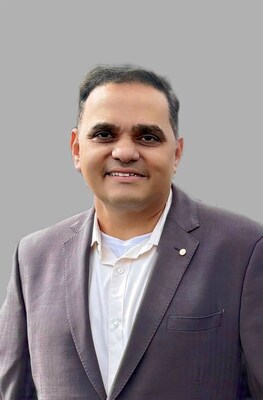
With the cloud becoming the backbone of modern enterprises, professionals like Lalith Sriram Datla are leading a quiet revolution behind the scenes-engineering resilient, secure, and cost-effective infrastructure for some of the most demanding industries, including healthcare and insurance. In this exclusive interview, Datla shares his journey, challenges, and vision for the future of DevOps, cloud security, and AI-assisted operations.
Lalith, tell us a bit about your background
and how you got started in cloud engineering.
I
started my professional journey in 2020, working as a software engineer in
India. Early on, I was fascinated by how the cloud was changing the way
businesses deployed and scaled applications. My curiosity led me to take up
roles that gave me end-to-end visibility-coding, configuring servers,
monitoring performance, and automating deployment. Over the past four years,
I've been fortunate to work with organizations like Chubb Limited and GE Healthcare, where I contributed to enterprise-scale
cloud environments. Today, I specialize in AWS infrastructure, security
architecture, Terraform automation, and observability frameworks.
Your current work at GE Healthcare seems impactful. Can you
elaborate on the cloud engineering efforts there?
At
GE Healthcare, the goal was to modernize the management of patient data across
healthcare systems. We weren't just building infrastructure; we were shaping
how clinicians and systems interact securely with sensitive data. I led the
provisioning of AWS accounts with well-defined IAM policies, automated the
entire environment setup with Terraform, and configured VPCs, subnets, route
tables, and security groups to match rigorous security standards.
We
also integrated AWS Security Hub and GuardDuty to
enable real-time threat detection. One of my proudest contributions was
building CI/CD pipelines using GitHub Actions and GitLab CI, which reduced our deployment time by over 50%. Additionally, I set up CloudWatch Insights, Prometheus, and Grafana dashboards to
give stakeholders visibility into system health and performance.
How do you balance cost
optimization and security in your cloud strategy?
That's a critical balance. Cloud gives you flexibility, but
it also opens up risk if not managed properly. At GE Healthcare, we
implemented lifecycle policies for
S3 and EBS to automate data archival and cut storage costs. At the same time,
we enforced least-privilege access controls using
custom IAM policies and monitored all changes via CloudTrail.
Security isn't just a feature-it's a culture. You bake it into
your architecture, automate compliance checks, and make sure your
infrastructure is auditable at all times. I also authored runbooks and SOPs to standardize our response
playbooks for outages, certificate expirations, and resource saturation
scenarios.
You've
also worked in insurance technology. What was unique about your time at Chubb
Limited?
Chubb was an exciting experience because we were delivering
digital insurance solutions to over 130,000 educational institutions. My role involved designing and
maintaining RESTful APIs using
Spring and Jersey, managing AWS Lambda for serverless operations, and enhancing
production stability with proactive monitoring tools like AppDynamics.
We
created an automated Jenkins
pipeline that supported weekly deployments-a big shift from the
traditional, slower release cycles. I also handled L2 support, resolved over
200 production issues, and coordinated with offshore teams to maintain uptime
and compliance. My time there taught me the value of reliability at scale.
What tools and platforms do you most
enjoy working with?
I've
become fluent in AWS services like
EC2, RDS, Lambda, IAM, and CloudWatch. For infrastructure as code, Terraform is my go-to-it makes
deployments predictable and scalable. In terms of CI/CD, I've used Jenkins, GitHub Actions, and GitLab CI extensively.
For
observability, I lean on Prometheus for
metrics, Grafana for
visualization, and CloudWatch
Insights for log analysis. And tools like ServiceNow, JIRA, and Confluence are indispensable for tracking incidents and
documentation in Agile teams.
Certifications often reflect evolving expertise.
What credentials have helped you in your journey?
I hold the AWS Certified Solutions Architect
- Associate, Microsoft Certified: Azure Administrator Associate, and the Certified Kubernetes Administrator (CKA). Recently, I also completed the Microsoft Generative AI Essentials program to expand
my understanding of AI's intersection with cloud operations.
These
certifications weren't just about passing tests-they deepened my architectural
thinking and gave me confidence to engage with stakeholders on strategic
decisions, not just tactical tasks.
What's next for you? Where
do you see your career heading?
My
current focus is on refining multi-cloud strategies, exploring zero-trust architectures, and integrating AI for observability and anomaly detection. I want to lead platform engineering
initiatives where teams are empowered with scalable, self-service
infrastructure.
Long-term, I'm interested in contributing to open-source tools
that improve cloud reliability and security. I also enjoy mentoring junior
engineers-building future-ready teams is just as important as building
future-ready systems.
Any advice for engineers
looking to break into DevOps or cloud engineering today?
Focus
on fundamentals first-understand networking, IAM, and scripting. Then build
your automation muscle with tools like Terraform and Jenkins. Don't chase
buzzwords; instead, solve real problems.
Also,
communication is underrated. You need to document, explain trade-offs, and
collaborate across functions. Cloud engineering isn't just about machines-it's
about enabling humans to move faster and safer.
Leave A Comment