













Anthropic opens Bengaluru office and announces new partnerships across India
India is the second-largest market
for Claude.ai, home to a developer community doing some of the most technically
intense AI work we see anywhere. Nearly half of Claude usage in India comprises
computer and mathematical tasks: building applications, modernizing systems, and
shipping production software.
Today, as we officially open our
Bengaluru office, we’re announcing partnerships across enterprise, education,
and agriculture that deepen our commitment to India across a range of sectors.
“India represents one of the
world’s most promising opportunities to bring the benefits of responsible AI to
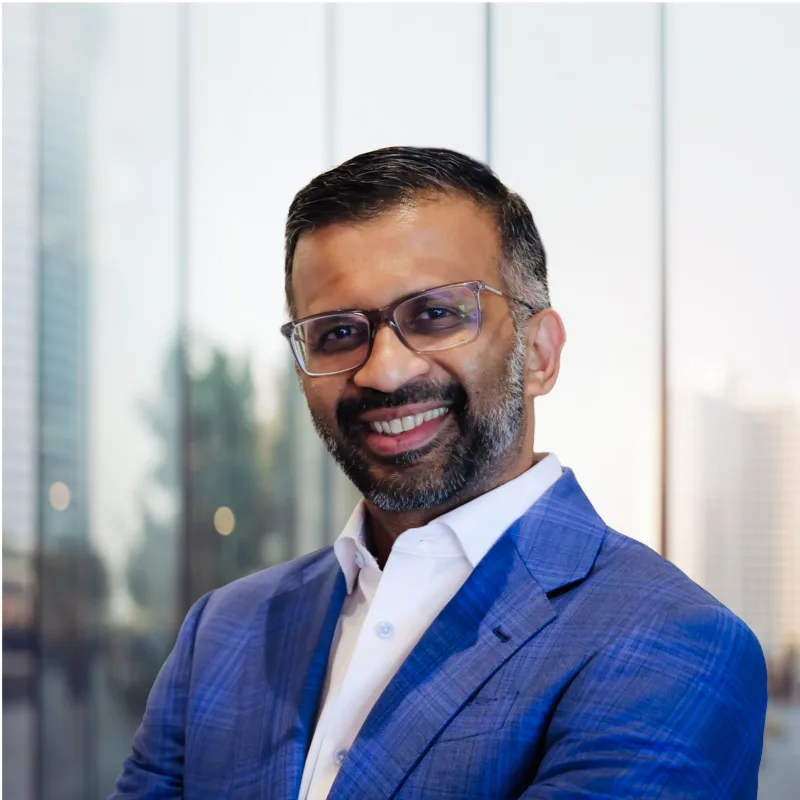
vastly more people and enterprises,†said Irina Ghose, Managing Director of
India, Anthropic. “Already, it’s home to extraordinary technical talent, digital
infrastructure at scale, and a proven track record of using technology to
improve people’s lives. That’s exactly the foundation you need to make sure
this technology reaches the people who can benefit from it most.â€
Building language capabilities for
a billion speakers
More than a billion people in
India speak one of over a dozen officially recognized languages, but AI models
continue to perform better in English than they do in other languages. Six
months ago, we launched a company-wide effort to narrow this gap by curating
higher-quality, more representative training data in 10 of the most widely
spoken languages throughout India: Hindi, Bengali, Marathi, Telugu, Tamil,
Punjabi, Gujarati, Kannada, Malayalam, and Urdu. This resulted in improvements to
our models, and we continue to work on enhancing their fluency.
Now, Anthropic is working with
Karya and the Collective Intelligence Project to build evaluations testing
performance on locally relevant tasks across domains like agriculture and law,
in partnership with domain experts from leading Indian nonprofits, including
Digital Green and Adalat AI. This work will inform how we improve future models
for speakers of Indic languages and for use cases important to India and the
businesses that use Claude. We intend to make the evaluations publicly
available for others to use.
Partnering with enterprises,
digital natives, and startups
Our run-rate revenue in India has
doubled since we announced our expansion in October 2025, and the range of
organizations building on Claude reflects how broadly that growth is
distributed—from large enterprises to digital-native companies to startups
shipping their first products.
To support this growing customer
base, our India team will offer applied AI expertise to enterprise customers,
digital natives, and startups, helping them design, build, and scale
Claude-powered solutions tailored to their business needs.
Air India is using Claude Code to
help developers ship custom software faster and at lower cost, as part of a
broader push to use agentic AI across its operations. CRED achieved 2x faster
feature delivery and 10% better test coverage with Claude Code. And Cognizant
is deploying Claude to 350,000 employees globally to modernize legacy systems,
accelerate software development, and support AI adoption among its enterprise
clients.
Among India’s startups, the story is similar. At Razorpay, AI is integrated into risk systems, decision-making processes, and operations across the company. At Enterpret, Claude powers its AI assistant, the engineering team builds with Claude Code daily, and the startup has shipped an MCP integration that brings customer insights directly into Claude. And Emergent, an AI-powered platform that lets anyone build software by describing what they want in plain language, reached $25 million in annual recurring revenue and two million users in under five months, built entirely with Claude.
Reaching students in low-income
communities
Educational and instructional tasks make up 12% of Claude.ai use in India. Pratham, one of India’s largest education nonprofits, chose Anthropic as its first strategic AI lab partner because of our shared focus on safety and educational rigor. Their Anytime Testing Machine, powered by Claude, is currently being piloted with 1,500 students across 20 schools, with plans to expand to 100 schools by the end of 2026. Adapted earlier this year for over 5,000 learners in Pratham’s Second Chance program, which supports women who have dropped out of formal schooling, the Anytime Testing Machine aims to create flexible, credible pathways for learning and certification by helping students practice for exams.
Anthropic is collaborating with Central Square Foundation to use EdTech and AI more effectively to educate children from underserved communities. As part of this collaboration, Anthropic will provide technical expertise, mentorship, and API credits to organizations developing AI-enabled tools—including personalized tutors, teacher coaching solutions, and assessment-driven instruction—with the goal of reaching more primary school students across India.
Incorporating AI into the public
sector
India has a track record of
building interoperable digital public infrastructure that improves people’s
lives. Anthropic is partnering with the EkStep Foundation to explore how AI can
build on these efforts and deliver population-scale impact in the domains that
matter most to India. Agriculture is one example. It makes up nearly a sixth of
the Indian economy and employs nearly half of the labor force. Using the
OpenAgriNet effort, we are working towards deployments of Claude that expand
access to expert knowledge in this critical sector.
We’re also demonstrating how
Claude Code and Cowork can have an impact within nonprofits
themselves—including Noora Health, which delivers accessible health coaching to
millions of families, and Intelehealth, which connects patients in remote
communities to quality medical care.
India has 50 million pending court
cases, and routine updates often take months to reach litigants. Accessing case
information typically requires repeated court visits or intermediaries to
navigate paper files and legal jargon. Anthropic is supporting Adalat AI to
improve access to judicial services with a national WhatsApp helpline,
launching today. Using Claude, it provides instant case updates as well as
translation, document summarization, and interactive querying of legal
documents in native Indian languages.
Driving adoption through
open-source standards
Anthropic created the Model
Context Protocol (MCP) as a universal open-source standard for connecting AI
applications to external systems, and recently donated it to the Linux
Foundation.
The Indian Ministry of Statistics
and Programme Implementation (MoSPI), with the support of nonprofit Bharat
Digital, recently launched the first official Indian government MCP server,
enabling users of AI systems to access and query authoritative national
statistics in an open and interoperable manner. In the private sector, Swiggy
uses the MCP to allow people to order groceries and make dining reservations
directly through Claude.
Growing Anthropic’s presence in
India
These
partnerships will grow in the coming months and years through our expanded
presence in India. Our new Bengaluru office—Anthropic’s second in Asia after
Tokyo—has officially opened. Led by Managing Director of India Irina Ghose, an
enterprise and startup technology leader, the office will focus on hiring local
talent across a wide array of roles.
Leave A Comment